Artwork Inventory & Studio Management
Effortlessly run your studio from one place
Simplify how you manage your artworks, contacts, accounts and payments.
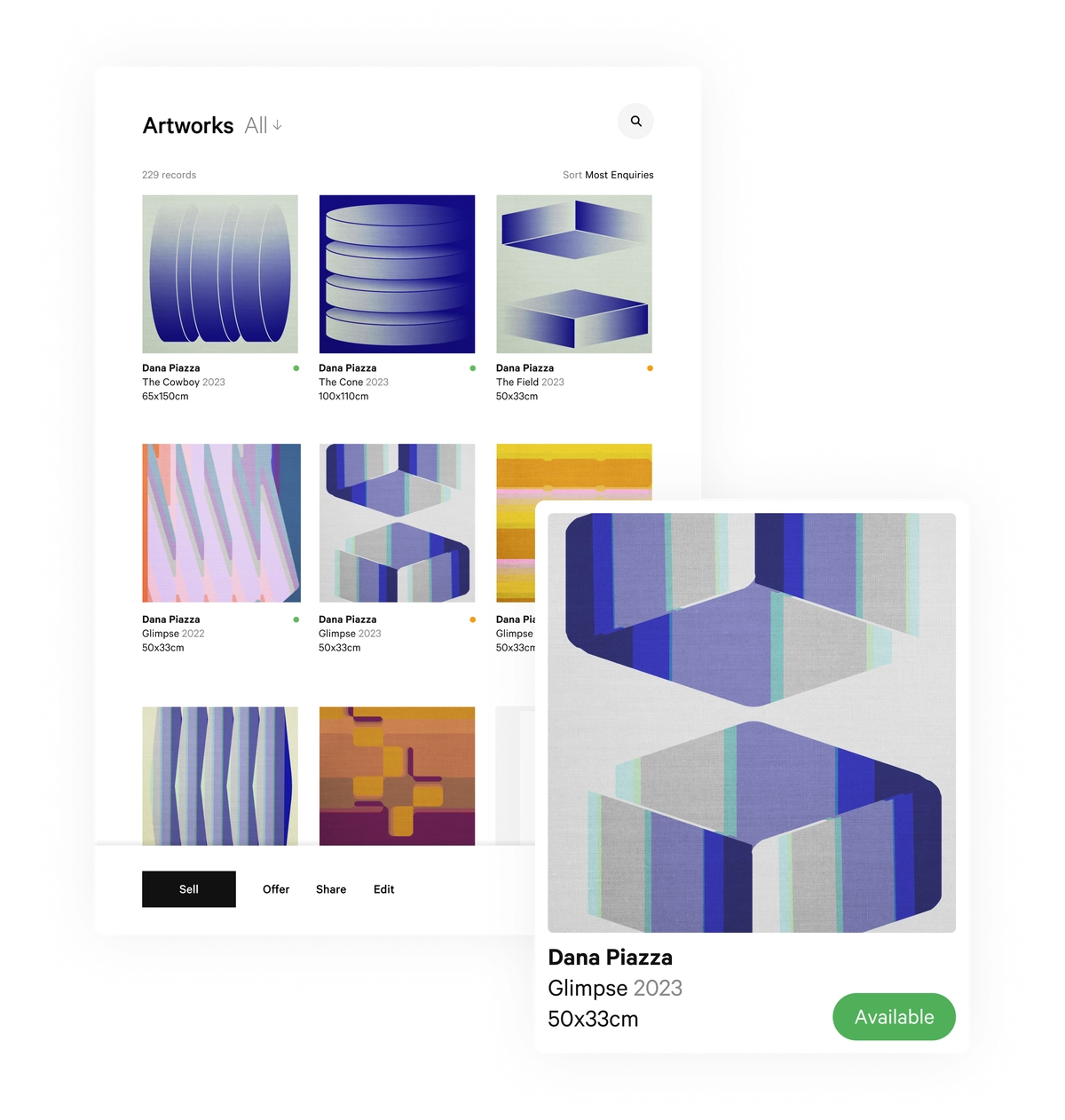
Powerful artwork management
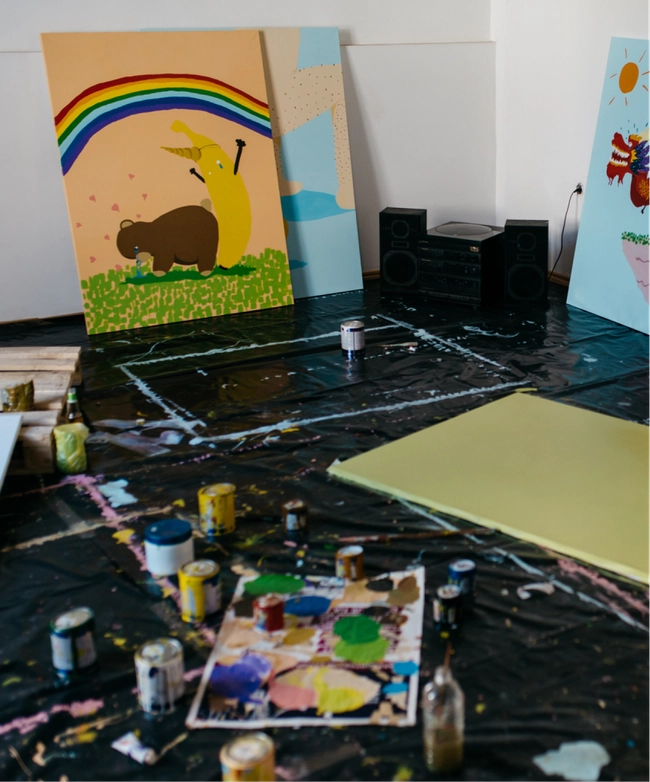
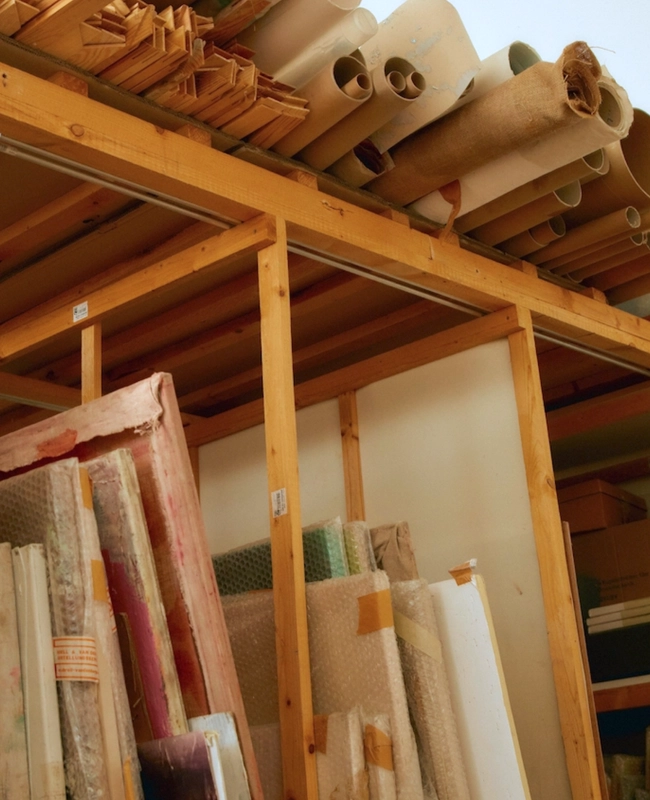
Detailed and well maintained inventory and database management is essential for any artist studio, regardless of size. We provide everything you need to effortlessly manage your artworks from creation to consignment, shipping and beyond, streamlining how you organize, share and track artworks.
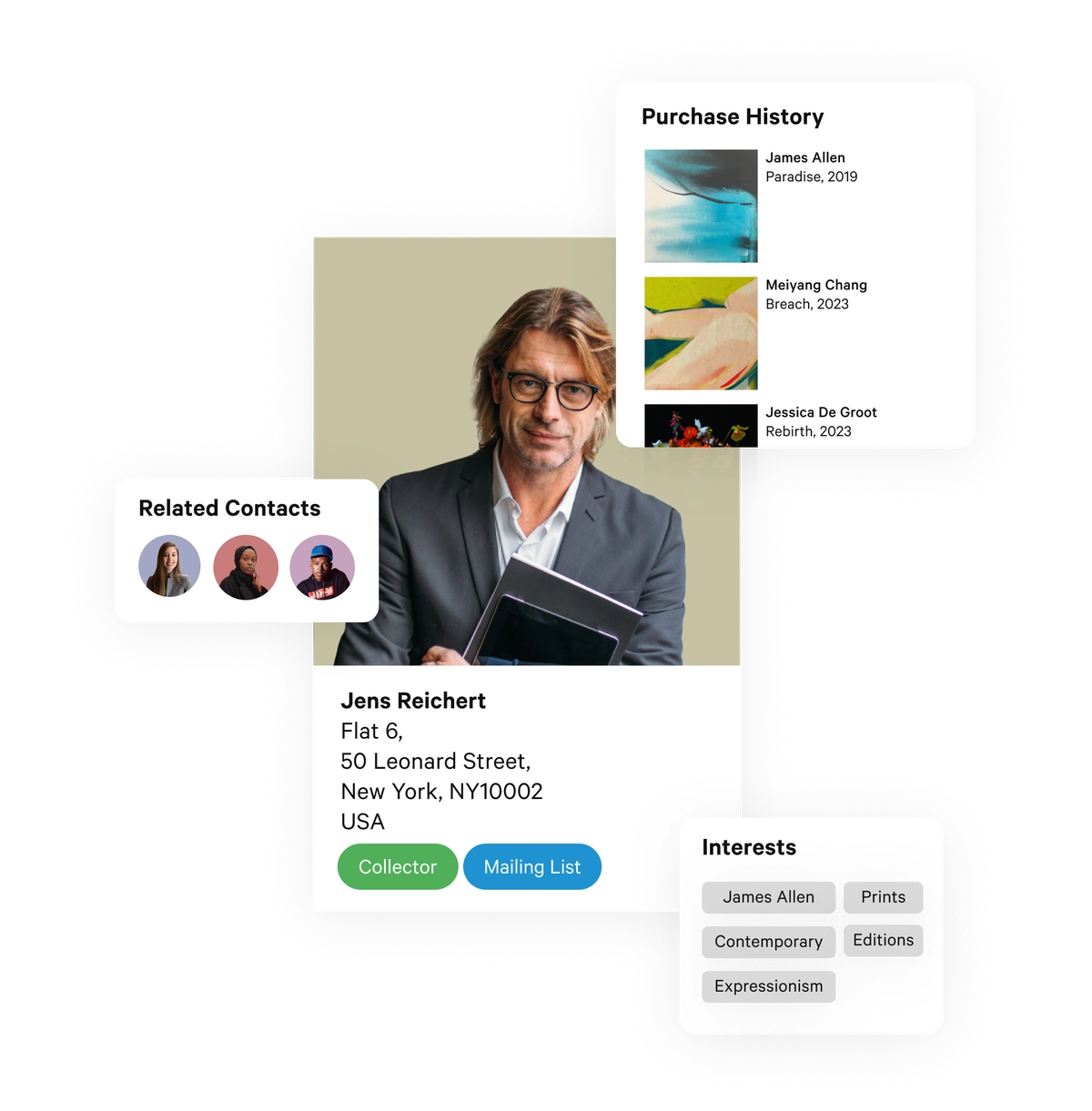
Make new connections
Organize and nurture relationships with existing and new collectors with comprehensive contact management. Detailed contact records help you store and access vital client information for future sales opportunities and understanding purchase history.
Future-proofing invoicing and payments
Our accounting and payment features go beyond basic invoice management by helping you stay on top of your sales. Easily understand your studio's financial performance, track profits and margins, analyse sales data and make data-driven decisions.

Documents and exports
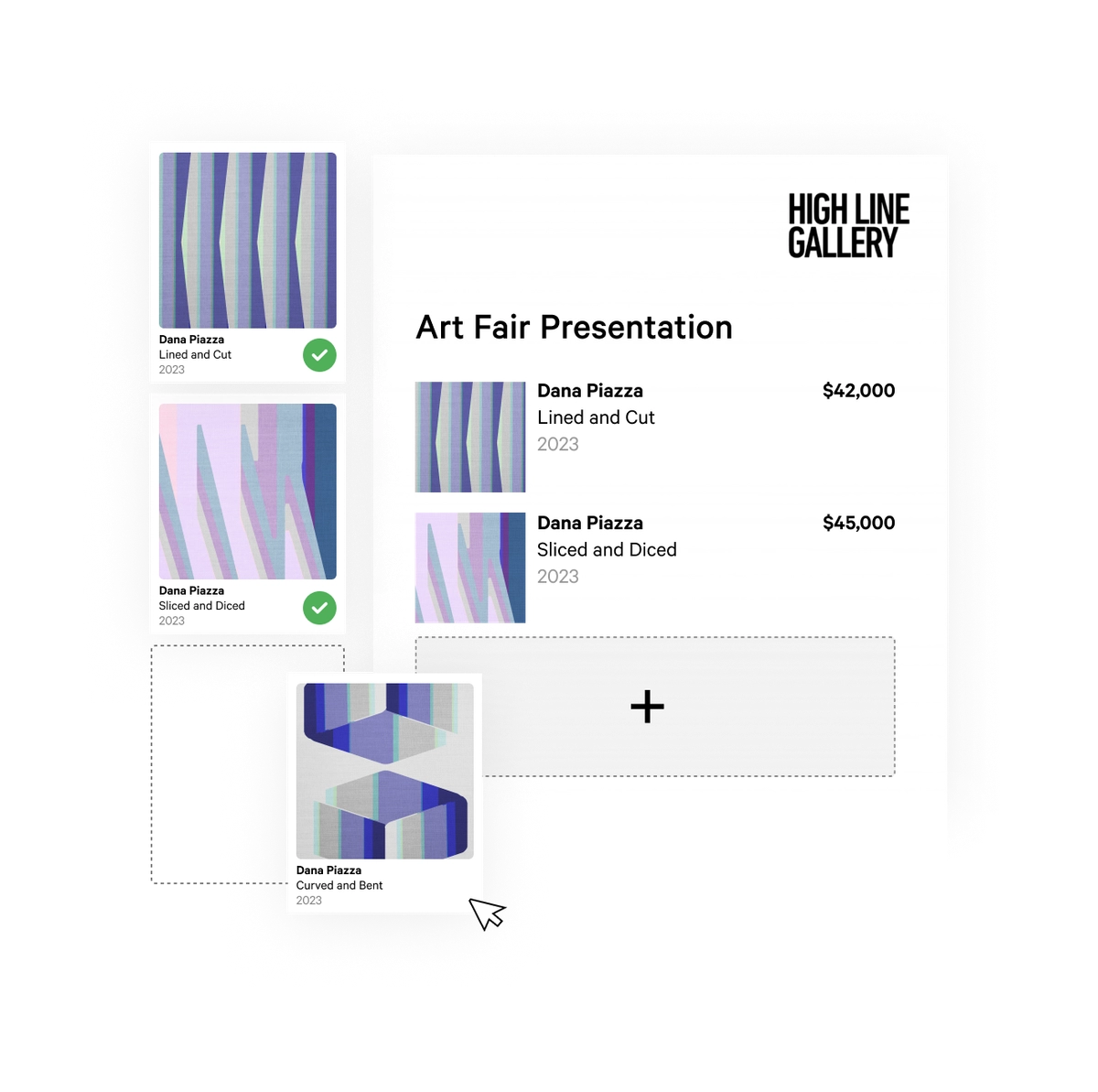
Store and organise important files securely within the platform, from Certificate of Authenticity documents to high-resolution images and shipping and customs documentation. Easily create custom documents like condition reports and financial reports whilst getting creative with beautiful Tear Sheets, PDF presentations and labels for exhibitions.
FAQs
Artwork inventory management is the process of cataloguing and tracking every piece you create or hold, including editions, locations, prices and provenance. Artlogic gives artists a structured, searchable record so nothing is misplaced or forgotten.
Record each work's title, year, medium, dimensions, edition, images and provenance, and update its status as it moves or sells. Artlogic standardises these fields so your catalogue stays consistent and ready to publish or share.
Artlogic lets you log each edition separately and maintain a full provenance and exhibition history for every work. This makes it easy to confirm authenticity and ownership history when selling or lending a piece.
The best tool is one built for art, not generic stock control. Artlogic is designed around artworks, editions and provenance, and connects your inventory to a portfolio website and sales tools in one platform.
Centralise your works, contacts and sales in one place rather than scattered files. Artlogic keeps your inventory current and shares it with your website and invoicing, reducing admin and keeping your studio records reliable.
A general CRM is built to track contacts, conversations, and sales deals for any kind of business. It doesn’t know what an artwork is. Artlogic is built for artists and studios, so your contacts are connected to your artworks. Each collector record shows which works they bought, what they’ve asked about, and their purchase history. Each artwork record holds its edition, location, consignment status, provenance, and sales history. With a general CRM, you’d still need separate spreadsheets or tools for inventory, invoicing, certificates of authenticity, and condition reports. Artlogic includes CRM capabilities, but expands to keep your works, contacts, sales, and paperwork in one place, so you spend less time on admin and more time in the studio.
To see how the top CRM platforms compare, and why fragmented systems hold art professionals back, read our guide. Artlogic keeps your works, contacts, sales, and paperwork in one place, so you spend less time on admin and more time in the studio.
Yes. Artlogic works as a CRM for visual artists, with contact management built into the same platform as your artwork inventory. You can store collector, gallery, curator, and press contacts in one place, along with each person’s interests, purchase history, and past conversations. Because contacts are linked to your artworks, you can see which collectors bought which works, which galleries hold your work on consignment, and who to follow up with when new work is ready. From there, you can send invoices, share artworks, and plan email campaigns without moving between separate tools.
Blog
Lorem ipsum dolor sit amet, consectetur adipiscing elit. Suspendisse varius enim in eros elementum tristique.