

Every art fair asks galleries the same question. How do you stand out when hundreds of exhibitors are competing for attention in the same space?
The traditional answer has been speed. VIP previews, exclusive access, waiting lists, and the pressure to secure works before someone else all encourage quick decisions. It is a familiar rhythm of the art fair calendar, built around urgency and limited time.
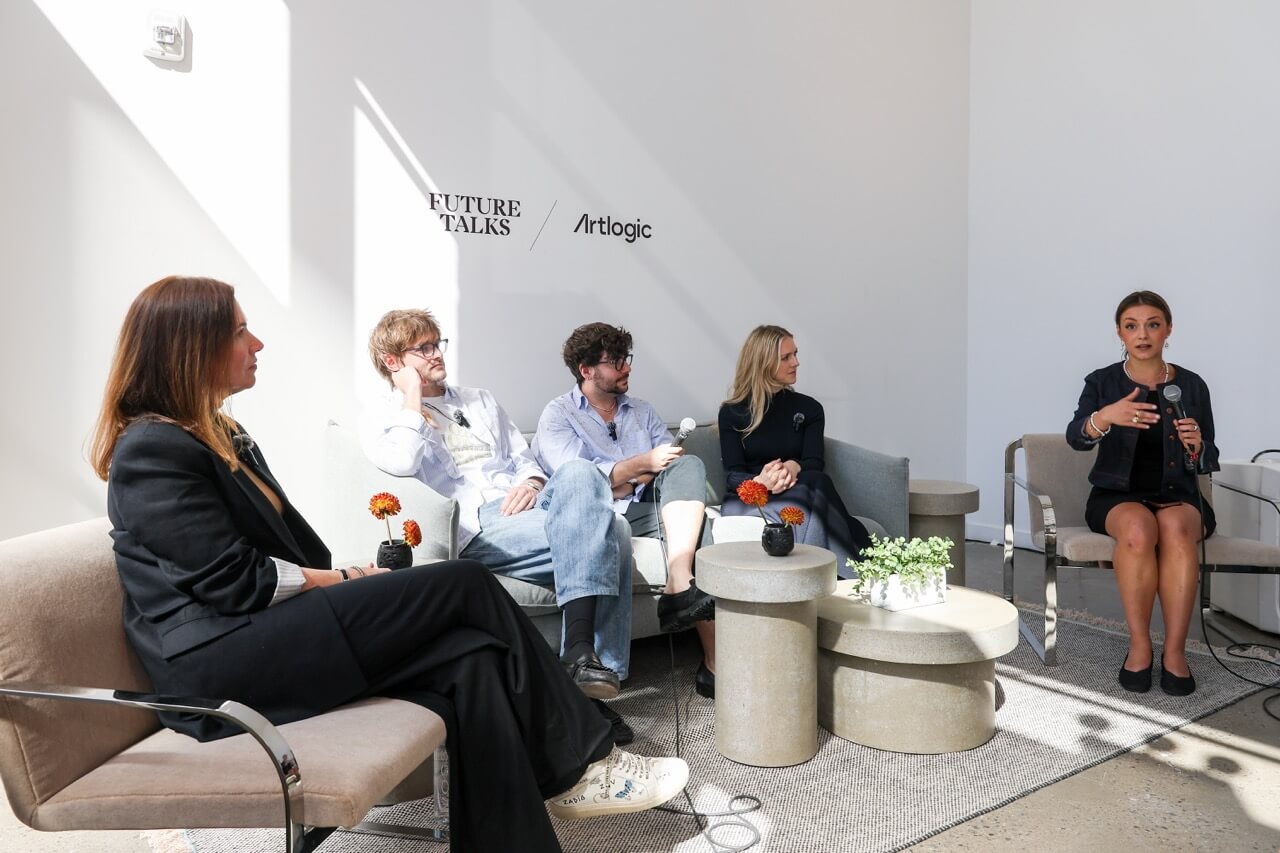
Yet a conversation at Future Fair New York suggested galleries might benefit from a different approach. Rather than focusing on how to accelerate decisions, the more useful question may be how to build relationships that continue long after the fair ends. A standout session, moderated by Elisa Carollo and featuring Thomas Martinez Pilnik, William Blomquist, Beatrice Masi, and Kellie Lehr, examined how collectors navigate an increasingly digital landscape.
How to Approach Art Collecting Across Fairs and Digital Networks brought together artists and gallerists to explore how today's collectors are building lasting relationships with galleries in an increasingly digital world. While each speaker approached the topic from a different perspective, they all returned to the same central idea: meaningful collecting has never been about moving faster. It's about slowing down enough to build genuine relationships.
Curiosity Is More Valuable Than a Checklist
For many collectors, especially those attending an art fair for the first time, the experience can feel overwhelming. Hundreds of galleries, thousands of artworks, and only a few days to see everything can make the fair feel more like a race than an opportunity to connect.
William Blomquist encouraged collectors to let go of that pressure. Instead of trying to optimize every hour or meticulously follow the floor map, he suggested embracing curiosity and allowing yourself to be surprised. The artworks that linger in your mind after you've walked away are often the ones worth returning to.
That mindset transforms the role of the fair itself. Rather than becoming a marketplace to conquer, it becomes a place to discover your own tastes, ask questions, and develop confidence over time.
Make Your Gallery Easy to Enter
For many first-time collectors, walking into a gallery booth can still feel intimidating. There is often a sense that others know more, or that a certain level of expertise is required before engaging.
Kellie Lehr addressed this directly, reminding the audience that galleries genuinely want people to ask questions. Collectors do not need to arrive with full knowledge of an artist’s career or the market. Curiosity is enough.
This has practical implications for galleries trying to build new collector bases. Accessibility is not just about hospitality. It is about long-term growth. The easier it is for someone to ask a question, the more likely that first interaction becomes the start of an ongoing relationship.
Often, the most valuable connections begin with something simple, such as why a particular work stands out.
Relationships Don't End When the Fair Closes
That idea was perhaps best articulated by Thomas Martinez Pilnik, co-founder of Los Angeles gallery Feia.
Feia, whose name comes from the Portuguese word for "ugly," embraces the unexpected. On the gallery's website, Thomas describes the name as representing "curiosity, novelty, beauty, surprise, and everything in between," an ethos that encourages viewers to look beyond first impressions and remain open to discovery. It feels like an appropriate philosophy for collecting itself.
Earlier this year, the Artlogic team had the pleasure of attending the opening of Feia's first permanent gallery in Highland Park, Los Angeles. Walking through the space, it was clear that community sits at the center of everything they do. Hearing Thomas speak at Future Fair reinforced that same philosophy.
As he put it:
"It's that slow discovery, that long-term relationship that's really starting to matter more and more and more."
Later in the discussion, he expanded on that idea.
"I don't exist here in person just to sell work. I exist because I believe in what I'm doing. I want to get to know you as collectors, as art admirers, as art workers, as artists."
It's a refreshing perspective in an industry that can sometimes appear driven by speed and exclusivity. Rather than measuring success by a single transaction, Thomas described building trust through conversation, shared interests, and genuine curiosity.
Technology and Digital Should Work for Relationships, Not Replace Them
Beatrice Masi described how younger collectors move fluidly between art fairs, gallery websites, social media, and newsletters as parts of one continuous journey, and technology fits naturally into that same idea. Rather than treating digital tools or AI as replacements for human connection, Thomas described using them simply "to make both of our lives easier." CRM systems, Offer Emails, and Private Views don't automate relationships. They protect them by creating more time for the ones that matter.
Looking Beyond the Booth
Each panelist came at collecting differently, but landed in the same place: trust curiosity over checklists, make it easy for people to ask questions, and build relationships that outlast the fair itself. Art fairs last a few days. The strongest collector relationships last decades.
The galleries that thrive won't be the ones with the most follow-up emails. They'll be the ones that remember why someone stopped at their booth in the first place, and keep that conversation going. As Thomas put it, "It's that slow discovery, that long-term relationship that's really starting to matter more and more and more." Good advice for collectors, and a pretty solid blueprint for galleries too.
Watch all of the Future Talks here.
About the author
Joe Elliott is President at Artlogic, where he has worked for nearly 15 years, rising from Client Account Manager to Chief Executive Officer before taking on his current role. A curator by training, with an MFA in Arts Administration from NYU, he brings deep, firsthand knowledge of both the gallery world and the business built to serve it.